
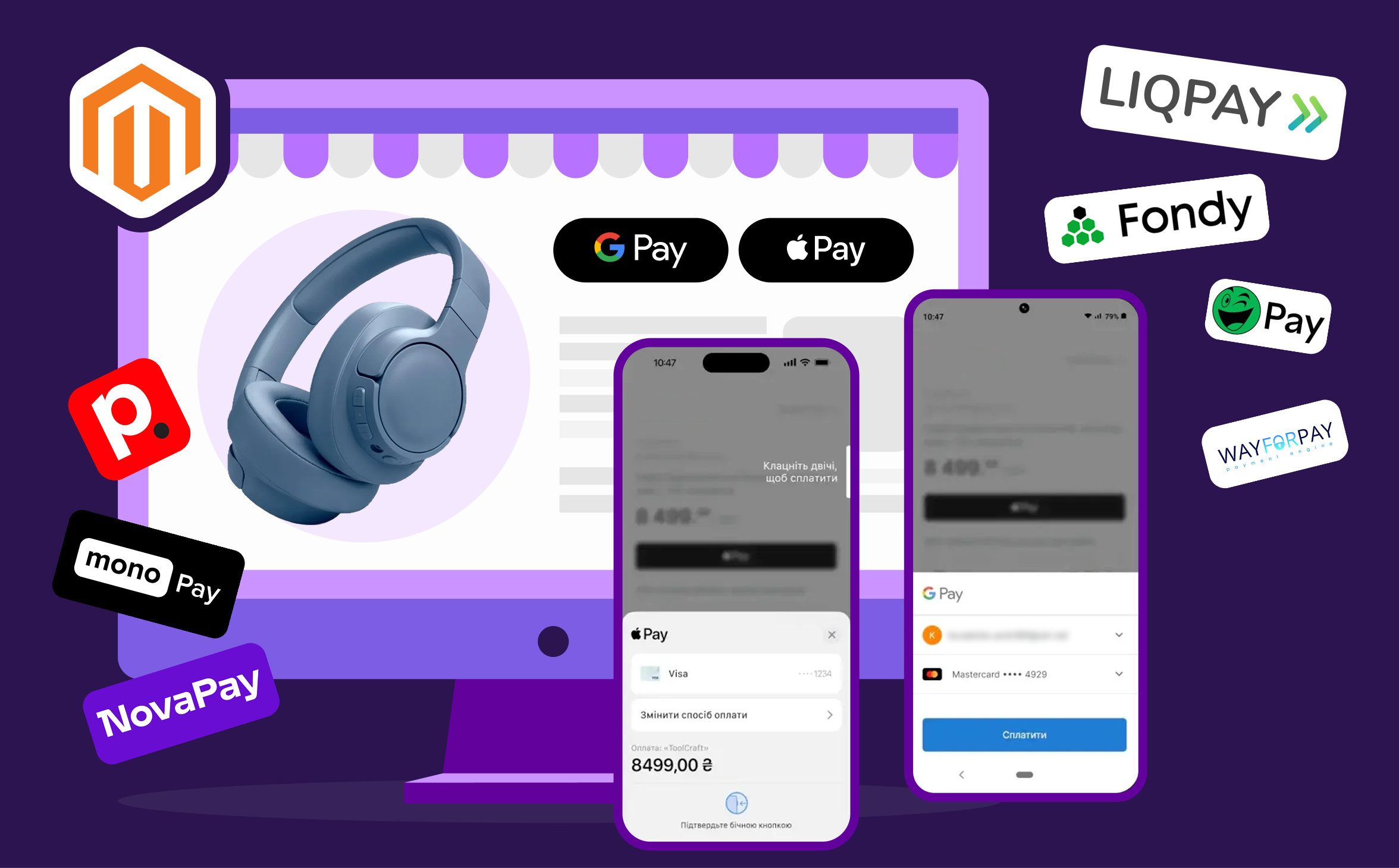
Five years ago, accepting payment by card details was enough for an online store, but that is no longer the case today. Online stores on Magento are growing, and expectations around the checkout experience are growing right along with them.
Buyers are already used to paying in one or two clicks: in banking apps, delivery services, and large marketplaces. No card numbers, no SMS codes, just Face ID or a fingerprint. And when they land on a Magento store, they expect the same experience. If it is not there, checkout simply does not get completed. According to various studies, almost 70% of online carts are abandoned, and part of that is directly tied to an inconvenient payment process or the absence of a preferred payment method.
That is why requests for Apple Pay and Google Pay have become more of a baseline requirement for eCommerce. Not because of trends, but because fast, frictionless payment directly affects conversion and real sales.
Magento as a platform lets you implement nearly any payment logic. But there is a big difference between formally supporting a payment method and having it run reliably in a live store. This is especially true in the Ukrainian market, where payment systems differ not just in fees but in UX, reliability, and behavior under load.
In this article, we cover:
why Apple Pay and Google Pay have become popular right now;
how they actually work in Magento;
and how LiqPay, MonoPay, WayForPay, Portmone, Fondy, and other payment systems differ from one another in practice.
Why Magento businesses are adding Apple Pay and Google Pay en masse right now
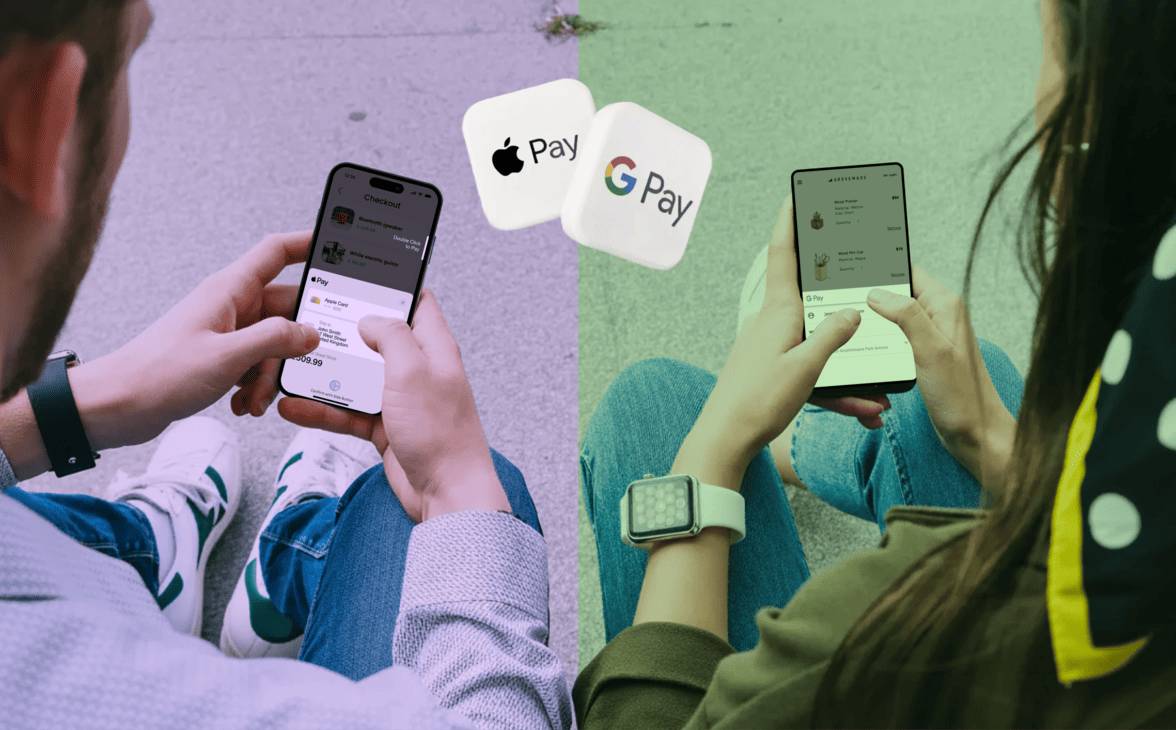
Apple Pay and Google Pay have been available in Ukraine for several years. But it is only recently that businesses which used to treat these payment methods as a nice-to-have, rather than an essential part of checkout, have started rolling them out in earnest.
The reason is simple: the buyer has changed.
A significant share of eCommerce traffic now comes from mobile devices. People click through to stores from ads on Google, Instagram, and messaging apps, and they do it from a smartphone. By the time they reach checkout, their expectations have already been shaped by other services.
Users no longer want to:
type in a 16-digit card number,
check its expiration date,
wait for a confirmation SMS code.
They want to pay the way they do in banking apps or the App Store: look at the screen, confirm, and the purchase is done.
This is not just our subjective read on the market and our clients. Back in 2020, financial reviews from Ukraine's Ministry of Finance already noted that customers were 52% more likely to complete an online purchase when a store supported Apple Pay or Google Pay. And that dependency has only grown since then, along with mobile traffic and eCommerce competition.
From a business standpoint, this directly affects conversion. The more fields in the payment form and the more steps to complete a purchase, the more customers drop off at the final stage. Apple Pay and Google Pay remove almost all of that friction. As a result:
the share of successful payments rises,
payment errors decrease,
and fewer carts get abandoned at the last step.
That is exactly why the surge we are now seeing in Magento projects is a direct market response to changing buyer behavior.
The question for businesses today is no longer whether they need Apple Pay and Google Pay, but how to implement them in Magento correctly so they actually work.
How Apple Pay and Google Pay actually work in Magento
One of the most common misconceptions is treating Apple Pay or Google Pay as standalone payment systems, similar to LiqPay or Portmone. That is not the case.
Apple Pay and Google Pay are a way to authorize and confirm a payment, not a payment gateway. The money still passes through:
a bank,
or a payment service,
or a payment aggregator.
In Magento, this works as follows: you connect, say, LiqPay, WayForPay, Fondy, or MonoPay, and Apple Pay and Google Pay then become available through them as additional buttons at checkout.
For the customer, this looks simple: they see the Apple Pay or Google Pay button, tap it, confirm with Face ID or a fingerprint, and the order is paid.
For the store, there is more complex logic behind it:
the payment service processes the Apple / Google token,
charges the customer's card,
sends the status to Magento,
and only then does the order become marked as paid.
This is where the real differences between payment systems show up. Because from Magento's perspective, what matters is not just that a system
how reliably statuses come through,
whether payments get lost,
how error handling works,
and what happens when something does not go according to plan.
Further in the article, we will look at Ukrainian payment services from exactly this angle.
Which payment services in Ukraine support Apple Pay and Google Pay on Magento
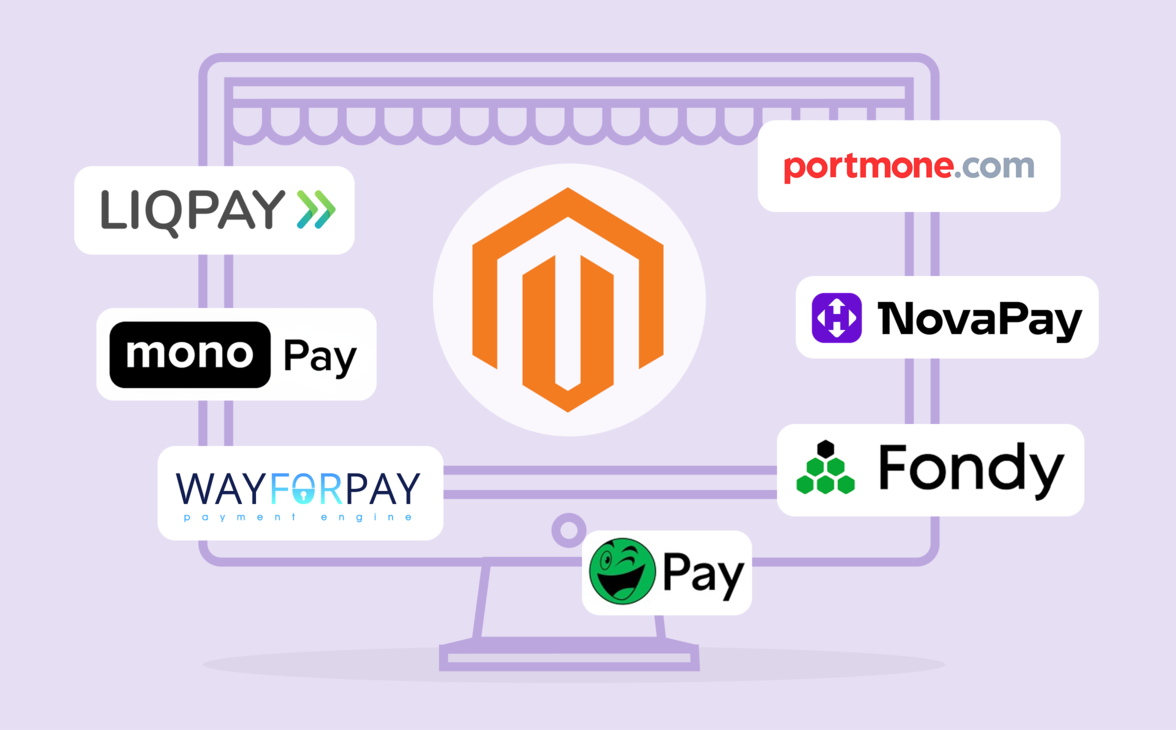
In Ukrainian eCommerce, Apple Pay and Google Pay are most often connected through payment services. They act as the intermediary between your Magento store, banks, and the Apple and Google ecosystems. But in practice, the differences in how they behave are quite noticeable.
Let's break down the services most commonly used in Magento projects.
LiqPay and Magento
One of the oldest and most widely used players on the market. It supports Apple Pay and Google Pay, works with most banks, and is familiar to nearly everyone. In Magento, it is often used as the primary payment system, or as a backup when another one fails.
The upside of LiqPay is that it is stable and integrates well.
The downside is a less-than-pleasant interface and sometimes idiosyncratic payment status logic that requires care to handle correctly at the Magento level.
MonoPay and Magento
MonoPay is not just a payment gateway, it is part of the monobank ecosystem. For users, it is one of the most convenient payment methods: fast, clear, and without unnecessary redirects.
On Magento, MonoPay works well for projects where:
mobile traffic is high,
the audience actively uses monobank,
a modern UX matters.
Apple Pay and Google Pay feel completely natural here, like a continuation of the banking experience.
WayForPay and Magento
This is a typical payment aggregator that aims to be a universal solution. It supports many payment methods, including Apple Pay and Google Pay. WayForPay is often chosen when flexibility is needed: different payment methods, different scenarios, multiple currencies.
But when it comes to Magento integration, callbacks and status handling need to be configured correctly, otherwise you can end up with situations where money was charged but the order was never confirmed.
Portmone and Magento
This service is already well known to the corporate segment and large businesses. It supports Apple Pay and Google Pay as well, but in practice Portmone is often used alongside another payment provider.
The reason is simple: during peak periods or outages, businesses do not want to be left unable to accept payments. That is why a setup like "Portmone plus backup LiqPay" is something we use fairly often in our work.
Fondy and Magento
Fondy is an international player that is active in Ukraine. It works well for projects that:
plan to work with international customers,
accept multiple currencies,
or plan to scale beyond the local market.
Fondy supports Apple Pay and Google Pay, but as with WayForPay, a lot depends on how the Magento integration itself is implemented.
Rozetka Pay and Magento
This is more of a solution tied to the Rozetka ecosystem than a universal payment gateway. It enjoys high user trust, but from a Magento standpoint it does not always work well as the sole payment method for an independent store.
NovaPay and Magento
NovaPay makes sense for projects closely tied to Nova Poshta: cash on delivery, shipping, and convenient scenarios for Ukrainian eCommerce. But it is typically not used as a replacement for standard payment gateways, more as an additional method.
Why Magento businesses increasingly choose multiple payment systems
In practice, more and more eCommerce businesses are moving away from relying on a single universal payment system. The reason is simple: even stable services can go down temporarily, due to technical failures, updates, bank-side issues, or peak load. When a store has only one payment service configured, any outage immediately translates into lost sales. A multi-channel payment model, on the other hand, spreads the risk and makes the payment process nearly seamless for the customer.
What this looks like in practice
In one of our Magento projects, Portmone was the primary payment system, it worked well for the client's chain of venues and supported Apple Pay and Google Pay. During peak periods, however, some transactions started failing to go through.
The solution was adding LiqPay as a backup channel. For the customer, the payment process did not change: the same Apple Pay button, the same checkout flow. If Portmone was temporarily unresponsive, Magento automatically routed the payment through LiqPay.
As a result, the business gained:
minimal losses during peak load,
a more stable flow of payments,
no lost transactions or support tickets.
While many Magento projects are moving to a multi-payment-system model, this kind of solution comes with technical nuances, from failover scenarios to checkout logic and financial reporting. What matters here is not simply connecting one more payment method, but designing a payment architecture around specific business scenarios. This is exactly the stage where Planeta Web works as a full-cycle team, combining development, integration, and analytics to keep the payment logic stable.
The difference between payment providers shows up not in a feature list, but in how checkout actually performs
On paper, most payment services look alike: Apple Pay and Google Pay support, fast payments, promises of high conversion. But in a live Magento store, the differences become clear under load, after the first hundreds or thousands of transactions.
In a stable payment scenario:
Apple Pay opens without delay,
confirmation happens without redirects,
Magento receives a correct callback within seconds,
the order immediately moves to "paid" status.
In a less stable one, everything technically works, but:
payment initialization is delayed,
third-party redirects appear,
the callback arrives late or with an error,
the order gets stuck in "pending" status and needs manual processing.
These differences do not always come down to overall service quality, but to technical integration details: API implementation, callback and webhook handling, behavior under peak load, and how the payment logic interacts with Magento checkout.
For the customer, this means a different level of convenience. For the business, it means a different success rate on payments, different support workload, and a different number of lost transactions.
That is exactly why, in practice, we evaluate payment systems not by their descriptions but by how they behave in real sales, and we often use some as primary and others as backup.
What to consider when choosing a payment system for Magento in the Ukrainian market
When choosing a payment provider, businesses most often look at the fee. But in Magento, that is only a small part of the picture. It is much more important to pay attention to the following:
First, the type of audience and ongoing monitoring of its behavior.
If you have a lot of mobile traffic, Apple Pay and Google Pay need to work flawlessly. If most of your customers are corporate, Portmone or classic card scenarios may matter more to them. But the key point is not to define your audience once, but to keep analyzing it continuously. Buyers grow accustomed to their preferred payment method, and its absence directly leads to abandoned purchases. That is why a Magento store needs to adapt its payment scenarios to real customer behavior, not to abstract assumptions.
Second, payment volume and frequency.
For a store with a handful of orders a day, almost any service will look stable. But once you are processing dozens or hundreds of payments a day, every nuance starts to surface: delays, failures, duplicates, status issues.
Third, the need for a backup option.
If payment processing is a critical part of your business, relying on a single payment system is a risk. Magento allows you to build a more reliable setup, and it is worth taking advantage of that.
And finally, the depth of compatibility with Magento specifically.
Unlike global solutions such as Stripe or Braintree, local payment services can behave differently under load and implement callbacks, timeouts, and webhook logic to varying degrees of quality, and that is exactly what you feel directly at Magento checkout.
The same payment service may run without issues on a simple website, but in a Magento store with a custom checkout, multi-currency support, complex shipping logic, or non-standard payment scenarios, delays, status errors, and stuck orders start to appear. That is why formal Magento support is not what matters most, documented, tested modules and proven hands-on experience with real Magento projects are.
Apple Pay and Google Pay are a standard, not an advantage
Ultimately, it is worth understanding that Apple Pay and Google Pay in Magento are no longer a wow feature, but a baseline level of service users expect. People want the option to pay quickly, without entering card details or extra steps.
But behind this simple fact lies an important choice:
which payment service you actually use,
whether you have a backup option,
and how well the entire system is integrated with your specific scenarios in Magento.
This is where the difference between a formal integration and a payment infrastructure that actually helps a business grow becomes clear.